

 Performance Health Partners

According to the ECRI Top 10 Patient Safety Concerns 2026 report, preventable harm remains a persistent problem, costing the healthcare system an estimated $17.1 billion each year in medical errors alone, according to the ECRI Top 10 Patient Safety Concerns 2026 report. Even more concerning, progress in reducing these events has stalled, signaling the need for a more systemic, proactive approach.
Read on to learn more about the top 10 patient safety concerns for 2026, the risks behind them, their impact on patients and organizations, and why healthcare leaders cannot afford to wait to address them.
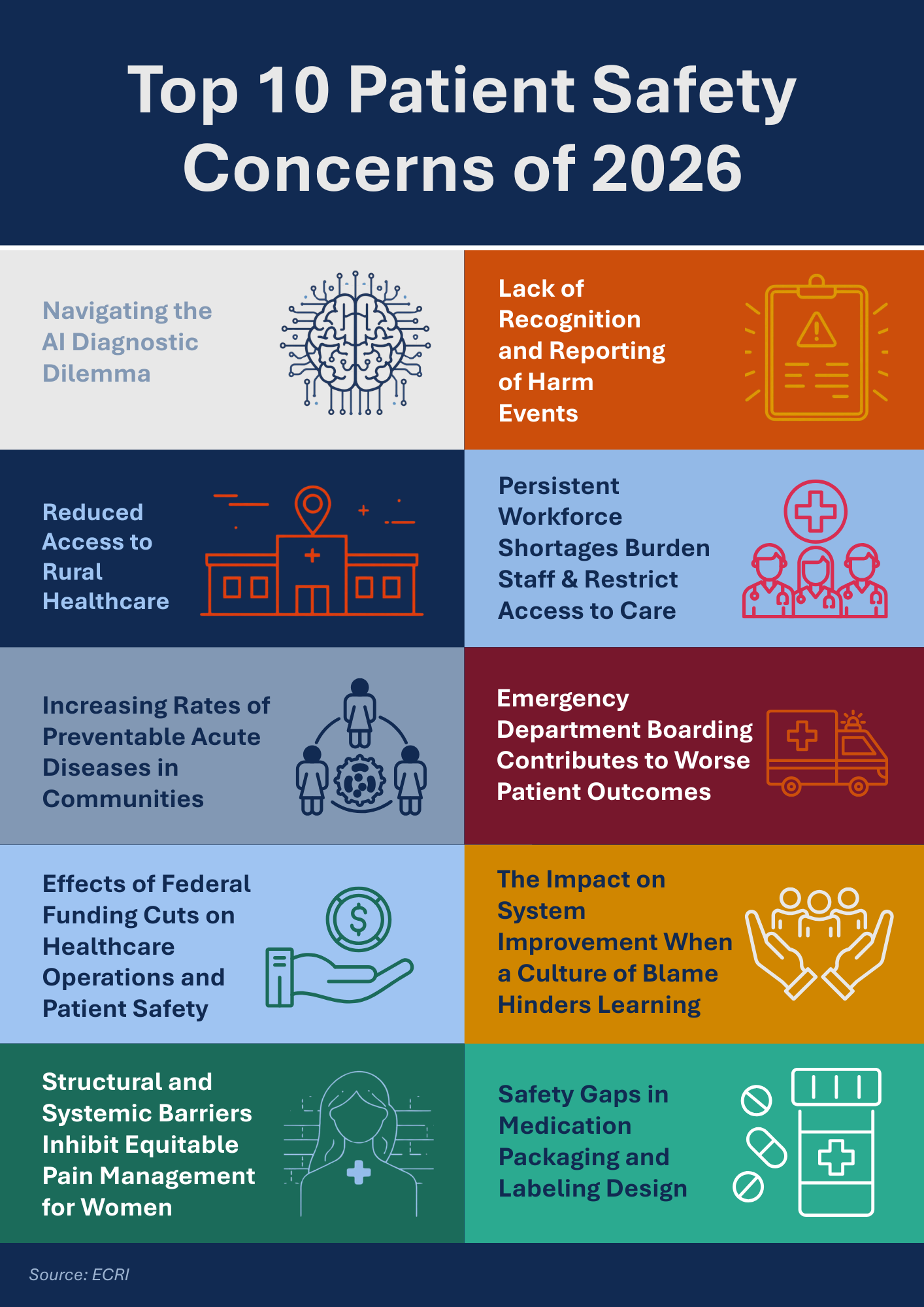
1. Navigating the AI Diagnostic Dilemma
Artificial intelligence (AI) is rapidly transforming healthcare, especially in diagnostics. In fact, 66% of physicians reported using AI in 2024, up from 38% in 2023. While AI can improve efficiency and reduce cognitive burden, it also introduces new patient safety concerns.
ECRI’s report found that some machine learning models failed to recognize 66% of critical conditions in testing scenarios, highlighting the risks of relying too heavily on algorithmic outputs. This overreliance can contribute to automation bias, when clinicians place too much trust in AI recommendations over their own judgment. As a result, important clinical nuances may be missed, increasing the likelihood of delayed or incorrect diagnoses.
AI has significant potential to strengthen care, but only when used with appropriate oversight and as a support tool rather than a substitute for clinical decision-making.
2. Reduced Access to Rural Healthcare
Healthcare access disparities are widening, particularly in rural communities. Since 2005, almost 200 rural hospitals have closed or transitioned away from inpatient care, and 34% are now at risk of closing.
When patients lack access to nearby care, they are more likely to delay treatment until conditions worsen. This leads to higher rates of preventable hospitalizations, increased mortality, and greater strain on already overburdened health systems. Rural communities, in particular, face compounded risks due to transportation barriers and limited provider availability.
3. Rising Rates of Preventable Acute Diseases
Diseases once under control are resurging due to declining vaccination rates and misinformation. In the United States, childhood vaccination coverage has dropped below the 95% threshold needed for herd immunity.
This resurgence is more than a public health setback. It is a growing patient safety issue that increases the risk of outbreaks, puts added strain on healthcare systems, and threatens vulnerable populations such as children, older adults, and immunocompromised individuals. As these preventable diseases spread, they can quickly overwhelm care capacity and undo years of public health progress.
4. Federal Funding Cuts and Financial Strain
Recent legislation has introduced major funding reductions, including nearly $1 trillion in Medicaid cuts over the next decade. These cuts are expected to leave 10 million Americans uninsured, increasing uncompensated care and forcing healthcare organizations to reduce services or staff.
Financial instability directly impacts patient care by limiting staffing levels, delaying infrastructure improvements, and reducing access to critical services. As healthcare organizations face tighter budgets, patient safety programs are often deprioritized, increasing the likelihood of adverse events and diminished quality of care.
5. Lack of Recognition and Reporting of Harm Events
Underreporting remains one of the most dangerous gaps in healthcare and a major barrier to addressing patient safety concerns. According to the Office of Inspector General, healthcare systems capture only half of adverse events.
Without complete reporting, organizations miss valuable chances to spot trends, investigate root causes, and prevent recurrence. The result is limited visibility into safety risks, ongoing systemic problems, and greater danger for patients.
6. Inequitable Pain Management for Women
Systemic biases continue to affect how pain is assessed and treated, contributing to the frequent dismissal or undertreatment of women’s pain due to structural and cultural barriers.
Inequities in pain management can lead to delayed diagnoses, inadequate treatment, and long-term health complications. Over time, these disparities erode trust in the healthcare system and contribute to poorer health outcomes for women, particularly those from marginalized communities.
7. Persistent Workforce Shortages
Staffing shortages remain a critical issue across healthcare settings. In fact, the Association of American Medical Colleges projects a shortage of up to 124,000 physicians in the United States by 2034.
When healthcare workers are overextended, it becomes a serious patient safety concern. Fatigue, stress, and high patient volumes can increase the likelihood of medical errors by reducing clinicians’ ability to provide attentive, thorough care, ultimately compromising both patient safety and staff well-being.
8. Culture of Blame vs. Culture of Safety
A culture of blame makes it harder for healthcare organizations to improve safety because staff may be afraid to report mistakes, near misses, or unsafe conditions. When people stay silent, important warning signs and system issues can go unnoticed, allowing preventable harm to continue.
A just culture, on the other hand, creates a safer environment by encouraging employees to speak up without fear of unfair punishment. That openness helps organizations learn from errors, address root causes, and make meaningful improvements that protect both patients and staff.
9. Emergency Department Boarding
Emergency departments are increasingly overcrowded, leading to “boarding,” where patients wait for extended periods before being admitted. These delays can slow critical interventions, worsen patient conditions, and raise the risk of medical complications, among other patient safety concerns.
Research has also linked boarding to poorer outcomes, including increased mortality. Meanwhile, the strain of overcrowding places even more pressure on staff, further increasing patient safety risks.
10. Medication Safety Risks from Packaging and Labeling
Medication errors remain a serious threat to patient safety, contributing to an estimated 7,000 to 9,000 deaths each year in the United States alone. Poor packaging and labeling design are a major factor, especially in high-pressure clinical environments where speed and accuracy are critical.
When labels are confusing, drug names look alike, or instructions are unclear, the risk of medical error increases. These mistakes can lead to incorrect dosing, administration of the wrong drug, or harmful interactions that put patients at serious risk.
The Bigger Picture: Systemic Risk Requires Systemic Solutions
The top patient safety concerns for 2026 matter not only because of their individual impact, but because they are deeply interconnected. Staffing shortages can fuel burnout, burnout can contribute to errors, and financial strain can prevent healthcare organizations from investing in stronger safety systems. When cultural barriers are added to the mix, mistakes are less likely to be reported, and opportunities to learn are often lost.
ECRI’s report shows just how costly this can be. Up to 12.6% of healthcare spending in high-income countries is tied to managing unsafe care. In other words, investing in patient safety is not only an ethical responsibility. It is also essential to reducing waste, improving outcomes, and building a more resilient healthcare system.
Moving Forward: A Call to Action
Healthcare organizations cannot tackle all patient safety concerns at once, but they can prioritize high-impact areas and adopt a systems-based approach. Key strategies include:
- Strengthening safety culture and healthcare leadership accountability
- Investing in workforce well-being
- Improving data collection and reporting systems
- Leveraging technology responsibly
- Addressing health equity gaps
Ultimately, patient safety is not a standalone initiative. It must be embedded into every aspect of healthcare delivery.
Final Thoughts: Top 10 Patient Safety Concerns 2026
ECRI’s 2026 report outlining the top 10 patient safety concerns for the year reveal a healthcare system at a crossroads. While technology, innovation, and policy shifts offer opportunities for improvement, they also introduce new risks.
The path forward requires more than incremental change. It demands a holistic, system-wide commitment to safety, transparency, and continuous learning. Organizations that embrace this mindset will not only reduce harm but also build more resilient, efficient, and trusted healthcare systems for the future.